

Many business owners still see digital marketing as a cost.
Ad budget, agency fees, content creation, SEO — all of it looks like money going out.
But the real question is not how much you spend.
The real question is: What return are you generating from that spend?
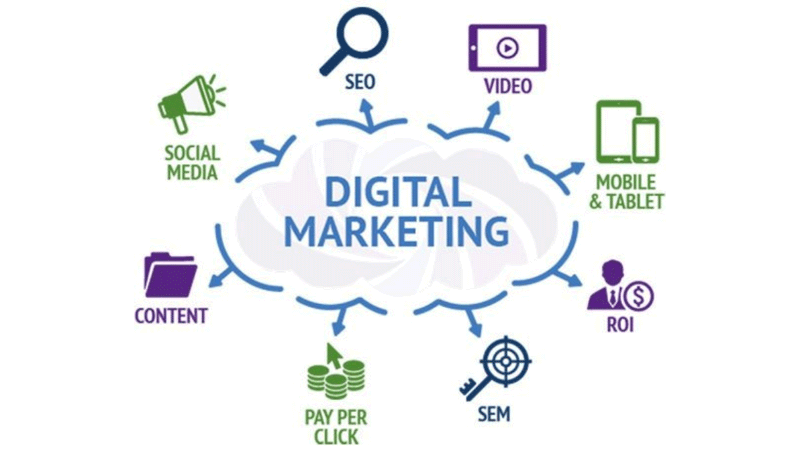
In 2026, digital marketing is no longer an optional activity. It is a structured growth system. When executed correctly, it is one of the highest ROI investments a business can make.
Let’s understand why.
1. Expenses Don’t Generate Returns — Investments Do
An expense reduces your cash without creating measurable returns.
An investment generates value over time.
When you invest in digital marketing:
-
You generate leads
-
You increase revenue
-
You build brand equity
-
You collect customer data
-
You create scalable growth systems
Unlike rent or utility bills, digital marketing has the potential to multiply your revenue.
2. Digital Marketing Is Measurable
Traditional marketing (hoardings, newspapers, flyers) often lacks clear tracking.
Digital marketing is different.
You can measure:
-
Cost per lead (CPL)
-
Cost per acquisition (CPA)
-
Return on ad spend (ROAS)
-
Conversion rate
-
Customer lifetime value
This means you are not guessing.
You know exactly:
-
How much you spent
-
How much you earned
-
What needs optimization
That’s how serious businesses operate — with data, not assumptions.
3. It Creates Predictable Revenue Systems
When digital marketing is done correctly, it becomes predictable.
For example:
-
₹1 spent on ads → ₹4 generated in revenue
-
1,000 visitors → 50 leads → 10 customers
-
5% conversion rate consistently maintained
Once you understand your numbers, scaling becomes systematic.
This predictability transforms marketing from a risky activity into a controllable investment.
4. It Builds Long-Term Assets
Some digital efforts create long-term value.
For example:
SEO
Ranking content can generate traffic for years.
Website & Funnel
A well-optimized funnel continues converting visitors without constant redesign.
Email Marketing
A growing email list becomes a direct revenue channel.
These are digital assets — not one-time costs.
5. It Compounds Over Time
Digital marketing benefits compound.
More traffic → More data
More data → Better optimization
Better optimization → Higher ROI
Higher ROI → More budget to scale
This creates a growth loop.
Unlike traditional expenses that disappear after payment, digital marketing improves with learning and optimization.
6. It Strengthens Brand Authority
Consistent digital presence builds authority.
Through:
-
Search visibility
-
Social proof
-
Content marketing
-
Paid ads positioning
Customers begin recognizing your brand.
Trust increases.
Conversion rates improve.
Price sensitivity decreases.
Brand equity is one of the most valuable long-term investments a business can build.
7. It Reduces Customer Acquisition Cost Over Time
Initially, ad costs may feel high.
But with optimization:
-
Targeting improves
-
Creatives perform better
-
Landing pages convert more
-
Follow-up systems improve
This reduces cost per acquisition.
Lower acquisition cost = higher profitability.
That’s investment behavior.
8. It Gives You a Competitive Advantage
Your competitors are already investing in digital channels.
If you don’t:
-
They capture online search traffic
-
They dominate paid ads
-
They build stronger brand recall
-
They collect more customer data
Digital marketing protects and expands your market share.
Ignoring it is not saving money — it is losing opportunity.
9. It Enables Scalable Growth
Offline growth has limits:
-
Physical capacity
-
Geographic boundaries
-
Manual effort
Digital marketing removes those barriers.
You can:
-
Expand nationally
-
Enter global markets
-
Automate lead generation
-
Scale without proportionally increasing costs
That’s how modern businesses grow.
10. The Real Expense Is Inaction
The biggest hidden cost is not marketing spend.
It is missed opportunity.
If you are not visible online:
-
Customers choose competitors
-
Your growth slows
-
Brand awareness stagnates
-
Revenue potential shrinks
In 2026, being invisible online is more expensive than running ads.
When Digital Marketing Feels Like an Expense
Digital marketing feels like an expense when:
-
There is no strategy
-
Tracking is not set up
-
Wrong audience is targeted
-
Funnels are weak
-
No optimization happens
Poor execution makes marketing look unprofitable.
But that is not a problem with digital marketing — it is a problem with strategy.
How to Treat Digital Marketing as an Investment
To shift from expense mindset to investment mindset:
-
Track everything
-
Focus on ROI, not impressions
-
Set clear KPIs
-
Test and optimize consistently
-
Think long-term, not one campaign
Digital marketing is not about running ads randomly.
It is about building a revenue engine.
Final Thoughts
Digital marketing is not an expense.
It is:
-
A lead generation system
-
A brand-building engine
-
A scalable revenue model
-
A measurable growth framework
The question is not whether you should invest in digital marketing.
The question is:
“Are you investing strategically, or just spending?”
Businesses that understand this difference grow faster, scale smarter, and dominate their markets.